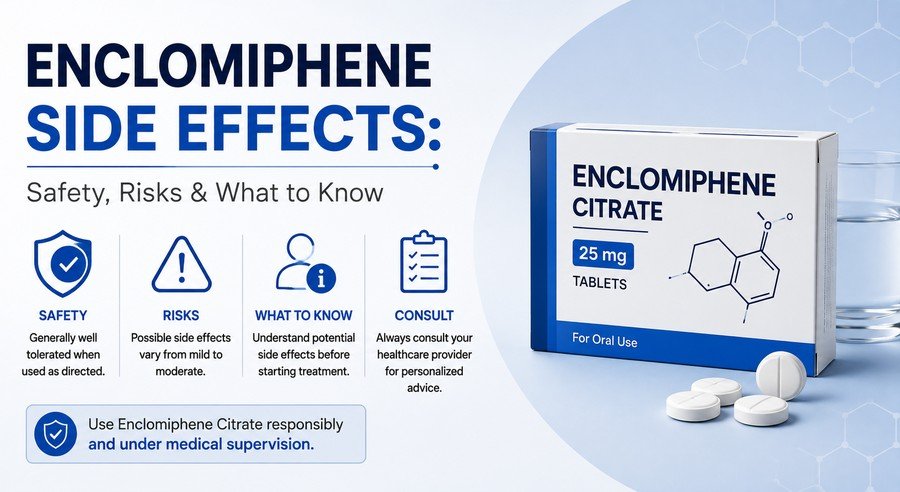
Enclomiphene Side Effects: An Overview
Enclomiphene is a selective estrogen receptor modulator (SERM) that has been studied as a treatment option for men with secondary hypogonadism and low testosterone. Unlike testosterone replacement therapy (TRT), enclomiphene works by stimulating the body’s own hormonal signaling, increasing luteinizing hormone (LH) and follicle-stimulating hormone (FSH), which can support endogenous testosterone production. Clinical studies have also found that sperm production can be maintained during treatment.
However, enclomiphene is not free of side effects or risks. Available research suggests that short-term safety has generally been reassuring, but more research is needed to fully understand its long-term safety profile.
What Are the Common Enclomiphene Side Effects?
Reported adverse effects in clinical research have included symptoms such as:
- Nausea
- Mood changes
- Changes in libido
- Reduced energy
- Headache or other nonspecific symptoms
- Changes related to hormone levels
- Sexual or reproductive symptoms in some individuals
The frequency and severity of side effects can vary depending on the study, dose, treatment duration, and individual health factors.
In an FDA review of clinical trial safety data, some participants receiving enclomiphene reported mild nausea and dry heaving, while another participant reported difficulty reaching orgasm and reduced sensation during intercourse. These events were uncommon in the reported trial data.
Enclomiphene and Mood Changes
Changes in mood are one of the potential concerns when using medications that influence estrogen signaling and testosterone levels.
A 2024 retrospective study comparing clomiphene and enclomiphene found that documented adverse effects—including mood changes—were less frequent during enclomiphene treatment in that particular patient cohort. However, this was not a large randomized clinical trial, so the findings should not be interpreted as proof that enclomiphene cannot cause mood-related effects.
Anyone experiencing significant depression, agitation, unusual emotional changes, or other concerning mental-health symptoms should speak with a healthcare professional.
Can Enclomiphene Affect Testosterone Levels?
Yes. Increasing endogenous testosterone is one of the primary reasons enclomiphene has been studied in men with secondary hypogonadism.
Research indicates that enclomiphene can increase LH and FSH, which in turn can stimulate the testes to produce testosterone. In a phase II study, enclomiphene increased testosterone into the normal range in men with secondary hypogonadism.
A 2025 systematic review and meta-analysis of randomized controlled trials also found that SERM therapy, including enclomiphene and clomiphene, significantly improved total testosterone, LH, and FSH compared with placebo.
Does Enclomiphene Affect Fertility?
One of the reasons enclomiphene has attracted interest is its potential to increase testosterone while preserving sperm production.
In randomized clinical studies, enclomiphene increased testosterone while maintaining sperm concentrations, in contrast to testosterone gel, which can suppress sperm production.
This does not mean enclomiphene is automatically a fertility treatment for every man. Fertility depends on multiple factors, and men trying to conceive should discuss treatment choices with a qualified urologist or reproductive specialist.
Enclomiphene and Estrogen
Because enclomiphene affects estrogen receptors, changes in estrogen-related hormone measurements may occur.
Interestingly, a 2024 comparison of enclomiphene and clomiphene found a significantly smaller change in estradiol with enclomiphene than with clomiphene in the studied patient group. The researchers also reported fewer documented adverse events with enclomiphene.
Nevertheless, individual hormone responses can differ. Appropriate laboratory monitoring may therefore be important during treatment.
Enclomiphene vs. Clomid: Are the Side Effects Different?
Enclomiphene is the trans-isomer of clomiphene citrate, meaning it is one specific component of the clomiphene mixture.
Some observational evidence suggests enclomiphene may produce fewer documented adverse effects than clomiphene. In a 66-patient retrospective study, decreased libido, reduced energy, and mood changes were less frequent with enclomiphene.
However, these results do not establish that enclomiphene is universally safer than Clomid. Larger and longer randomized studies would be needed for a definitive comparison.
What Are the Long-Term Risks of Enclomiphene?
Long-term safety is one of the biggest unanswered questions about enclomiphene.
Existing clinical research has generally focused on relatively limited treatment periods. A systematic review published in 2025 concluded that SERM therapy can improve hormone levels in men with hypogonadism but noted the need for further evidence regarding longer-term outcomes.
Potential areas that may require monitoring include:
- Testosterone and estrogen levels
- LH and FSH
- Hematocrit and hemoglobin
- Lipid levels
- Liver-related laboratory markers when clinically appropriate
- Prostate-related assessments when indicated
- Symptoms and overall treatment response
Long-term treatment should therefore be individualized rather than based solely on online dosage recommendations.
Who Should Be Careful With Enclomiphene?
Enclomiphene should not be treated as a general testosterone-boosting supplement.
Before considering treatment, a healthcare professional may evaluate:
- The underlying cause of low testosterone
- Morning testosterone measurements
- LH and FSH
- Fertility goals
- Relevant medical history
- Current medications
- Other hormone levels when appropriate
Men with unexplained hormonal abnormalities or significant reproductive concerns may require evaluation by an endocrinologist or urologist before treatment.
When Should You Contact a Doctor?
Seek medical advice if you develop persistent or significant symptoms while taking enclomiphene, particularly:
- Severe or persistent mood changes
- Significant sexual dysfunction
- Persistent nausea or other troublesome symptoms
- New visual symptoms
- Symptoms that are rapidly worsening
- Any unexpected or severe reaction
Do not change the dose or discontinue a prescribed treatment without discussing it with your healthcare professional.
Is Enclomiphene Safe?
Current evidence suggests that enclomiphene has shown a generally acceptable short-term safety profile in clinical studies, but “safe” does not mean risk-free.
Research has demonstrated increases in testosterone and preservation of sperm concentration in men with secondary hypogonadism, while recent comparative research has reported fewer documented adverse events with enclomiphene than with clomiphene. However, the evidence base remains smaller than for many established therapies, and long-term safety data are still developing.
Frequently Asked Questions
What are the most common enclomiphene side effects?
Reported adverse effects have included nausea, mood-related symptoms, libido changes, reduced energy, and other hormone-related or nonspecific symptoms. Individual responses vary.
Is enclomiphene safe for men?
Clinical studies have generally reported a reassuring short-term safety profile, but long-term safety is not yet fully established. Treatment should be medically supervised.
Does enclomiphene increase testosterone?
Yes. Clinical studies have found that enclomiphene can increase endogenous testosterone by stimulating LH and FSH production.
Can enclomiphene affect fertility?
Studies have found that enclomiphene can increase testosterone while maintaining sperm concentrations in men with secondary hypogonadism. However, individual fertility outcomes can differ.
Is enclomiphene safer than Clomid?
Some observational research suggests fewer documented adverse effects with enclomiphene than clomiphene, but there is not enough evidence to conclude that enclomiphene is universally safer.
How long do enclomiphene side effects last?
There is no single timeframe that applies to everyone. Duration can depend on the adverse effect, dose, treatment duration, and individual metabolism. Persistent symptoms should be discussed with a healthcare professional.
Does enclomiphene have long-term side effects?
The long-term safety profile is not completely established. More long-duration research is needed to determine potential risks associated with prolonged use.
Final Takeaway
Enclomiphene may help increase testosterone while supporting the body’s natural hormonal signaling and preserving sperm production in appropriately selected men. Research to date suggests that its short-term safety profile is generally reassuring, and some studies report fewer adverse effects than clomiphene.
However, enclomiphene side effects and long-term risks should not be overlooked. Evidence on prolonged use remains limited, and treatment should be based on an appropriate medical evaluation, laboratory monitoring, and individual treatment goals.
This article is for educational purposes only and should not replace advice from a qualified healthcare professional.