For many people experiencing erectile dysfunction (ED), trying medication for the first time can come with high expectations. They may expect to take a pill and experience an immediate, automatic erection.
So, when the expected result does not happen, the first reaction is often simple:
“The ED pill didn’t work.”
However, a disappointing first experience does not always mean that erectile dysfunction medication is ineffective. In some cases, factors such as timing, expectations, food, alcohol, sexual stimulation, anxiety, or underlying health conditions may influence the experience.
Understanding how ED medication works and what can affect its response may help first-time users avoid unrealistic expectations and have a more informed conversation with a healthcare professional.
How Do ED Pills Work?
Common erectile dysfunction medications, including sildenafil and tadalafil, belong to a group of medicines often called PDE5 inhibitors.
One of the biggest misconceptions among first-time ED users is that these pills automatically create an erection.
That is generally not how they work.
ED medication is designed to support the body’s natural erectile response. Sexual arousal and stimulation are typically still required for the medication to have its intended effect.
This means that simply taking the pill and waiting for an erection to happen automatically may lead to disappointment.
A first-time user who does not understand this may incorrectly assume that the medication has failed.
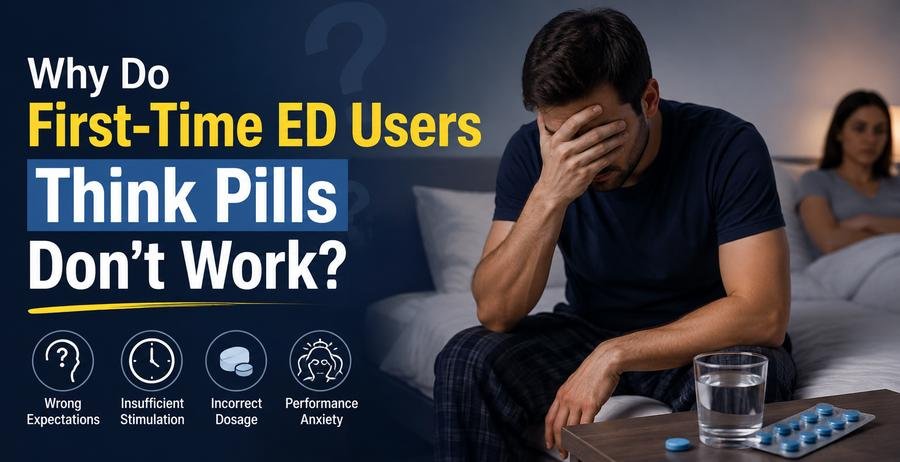
1. Unrealistic Expectations
One of the main reasons first-time ED users think pills do not work is unrealistic expectations.
Some people expect:
- An immediate erection
- An automatic physical response
- A guaranteed result every time
- No need for sexual stimulation
- The same results regardless of food, alcohol, stress, or fatigue
In reality, erectile function is influenced by both physical and psychological factors.
ED medication may support the body’s response, but it does not necessarily remove every factor that can affect sexual performance.
When expectations are too high, even a partial or delayed response may be interpreted as complete treatment failure.
2. The Medication May Not Have Had Enough Time to Work
Timing can play an important role in how a person experiences ED medication.
Different medications may have different onset times, and first-time users may become concerned if they do not notice an immediate effect.
Someone may think:
“I took the pill, but nothing happened. It must not work.”
However, taking additional medication because the expected response has not appeared quickly can be unsafe.
The medication should only be taken according to the instructions provided by a qualified healthcare professional.
A better approach is to understand the expected timing of the specific medication being used and follow the prescribed guidance.
3. Food or Alcohol May Affect the Experience
What happens before taking ED medication can sometimes influence the perceived result.
For some medications, a large or high-fat meal may affect how quickly the medicine is absorbed. A person who takes medication immediately after a heavy dinner may experience a different response than expected.
Alcohol can also affect sexual performance.
For example, a first-time user may take ED medication after:
- A heavy meal
- Several alcoholic drinks
- A stressful day
- Very little sleep
If the result is disappointing, the medication may receive all the blame even though several other factors could be involved.
The impact of food and alcohol can vary depending on the medication, so users should follow the instructions provided by their healthcare professional or pharmacist.
4. Performance Anxiety Can Affect the Result
Trying ED medication for the first time can create significant pressure.
A person may constantly ask themselves:
- Is the medication working yet?
- Why am I not getting an erection?
- What if it does not work?
- Did I take it correctly?
- What will my partner think?
This constant monitoring can increase performance anxiety.
Instead of focusing on sexual stimulation and intimacy, the person becomes focused on testing whether the medication is working.
This can create a frustrating cycle:
High expectations → Anxiety → Reduced arousal → Disappointing experience → Belief that the pill does not work
For some people, anxiety and stress may be important contributors to why the first experience does not meet expectations.
5. Sexual Stimulation Is Usually Still Necessary
Another common misunderstanding is the belief that ED pills automatically cause an erection.
In most cases, sexual stimulation and arousal are still required.
A person may take the medication, wait for an automatic erection, and conclude that the pill is ineffective when nothing immediately happens.
A more realistic expectation is that the medication may support the body’s natural response during sexual arousal.
Factors such as emotional comfort, attraction, stimulation, anxiety, and stress can still influence the experience.
Why ED Medication May Seem Not to Work
| Possible Factor | How It May Affect the Experience | What to Consider |
|---|---|---|
| Unrealistic expectations | The user expects an immediate or automatic erection | Understand how the specific medication is intended to work |
| Incorrect timing | The medication may not have had sufficient time to take effect | Follow professional instructions regarding timing |
| Food or alcohol | A heavy meal or alcohol may influence the overall experience | Check medication-specific guidance |
| Performance anxiety | Stress can interfere with arousal and sexual performance | Reduce pressure and focus on the overall experience |
| Underlying health factors | Medical conditions or other medicines may affect response | Discuss persistent problems with a healthcare professional |
6. Every Person May Respond Differently
A common mistake is comparing one person’s experience with someone else’s.
A first-time user may hear that sildenafil or tadalafil worked immediately for a friend and expect exactly the same result.
However, responses can vary.
Factors that may influence the experience include:
- Overall health
- Age
- Severity of erectile dysfunction
- Cardiovascular health
- Blood flow
- Psychological stress
- Other medications
- Underlying medical conditions
Because erectile dysfunction can have different causes, the same treatment may not produce identical results for everyone.
7. The Underlying Cause of Erectile Dysfunction Matters
Erectile dysfunction is not always caused by a single factor.
For some people, psychological factors such as stress or performance anxiety may play a significant role. For others, physical health factors may contribute.
Potential underlying factors can include:
- Diabetes
- Cardiovascular conditions
- High blood pressure
- Smoking
- Obesity
- Hormonal issues
- Neurological conditions
- Certain prescription medications
- Stress and anxiety
Because the causes of ED can vary, it is possible that a person may need an individualized treatment approach.
A medication that works well for one person may not be the most effective option for another.
8. The Medication or Dose May Need Medical Review
If erectile dysfunction medication does not produce the expected results, some users may assume that taking more will solve the problem.
That can be dangerous.
Users should not increase the dose, combine ED medications, or change how they take prescription medication without medical guidance.
A healthcare professional can review:
- Whether the medication was taken correctly
- Whether timing may have affected the response
- Possible interactions with other medications
- The presence of underlying health conditions
- Whether a different treatment approach should be considered
A disappointing first experience does not automatically mean that every ED treatment will be ineffective.
9. One Attempt Does Not Always Tell the Whole Story
A single experience can be affected by many temporary circumstances.
For example, a person may have been:
- Extremely anxious
- Very tired
- Under significant stress
- Drinking alcohol
- Distracted
- Recovering from illness
- Focused entirely on whether the medication was working
Because of this, one unsuccessful experience may not always provide a complete picture of how a treatment will work under different circumstances.
If ED medication repeatedly does not seem effective, the safest approach is to discuss the issue with a qualified healthcare professional.
10. First-Time Users May Judge the Medication Too Quickly
The phrase “ED pills don’t work” may sometimes be based on a misunderstanding rather than a complete evaluation of the treatment.
First-time users may judge the medication within minutes or based on a single experience.
However, the response to erectile dysfunction medication can depend on several factors, including:
- The specific medication
- Timing
- Food intake
- Alcohol consumption
- Sexual stimulation
- Anxiety levels
- Overall health
- Other medications
Understanding these factors can help users develop more realistic expectations.
What Should You Do If ED Medication Doesn’t Work?
If an ED pill does not seem to work as expected, do not immediately change the dose or take another medication.
Instead, consider whether any of the following may have influenced the experience:
- Was the medication taken according to professional instructions?
- Was enough time allowed for the medication to take effect?
- Was sexual stimulation and arousal present?
- Could a heavy meal have affected the experience?
- Was alcohol involved?
- Was performance anxiety unusually high?
- Could another health condition or medication be involved?
The appropriate next step is to discuss persistent concerns with a healthcare professional.
They can help identify whether the issue relates to medication use, expectations, interactions, or an underlying cause of erectile dysfunction.
When Should You Speak With a Doctor?
It may be important to seek medical advice if:
- ED medication repeatedly does not work as expected
- Erectile difficulties continue over time
- You experience side effects
- You are concerned about medication interactions
- You have an existing health condition that may affect treatment
- The cause of erectile dysfunction is unclear
Erectile dysfunction can sometimes be associated with other health issues, which is why persistent symptoms should not simply be ignored.
Frequently Asked Questions
Why didn’t my ED pill work the first time?
A disappointing first experience can be influenced by factors such as unrealistic expectations, timing, food, alcohol, performance anxiety, sexual stimulation, or underlying health conditions. It does not automatically mean the medication will never work.
Do ED pills work immediately?
Different medications have different expected onset times. Users should follow the instructions provided for their specific medication and avoid taking additional doses without professional guidance.
Do ED pills cause an automatic erection?
Generally, ED medications are intended to support the body’s erectile response during sexual arousal. Sexual stimulation is typically still necessary.
Can anxiety make ED medication seem like it isn’t working?
Yes. Performance anxiety and stress can interfere with sexual arousal and performance, which may contribute to a disappointing experience.
Can food affect ED medication?
For some ED medications, food—particularly a large or high-fat meal—may affect absorption or how quickly the medication appears to work. The effect depends on the specific medication.
Can alcohol affect ED medication results?
Alcohol can affect sexual performance and may influence the overall experience. Users should follow medical guidance regarding alcohol and their specific medication.
Should I take a higher dose if the pill doesn’t work?
No. Do not increase the dose or combine medications without guidance from a qualified healthcare professional.
What should I do if ED medication repeatedly doesn’t work?
Speak with a healthcare professional. They can review how the medication is being used, assess possible interactions or underlying health conditions, and discuss whether another treatment approach may be appropriate.
Final Thoughts
When first-time ED users believe that a pill does not work, the medication itself may not always be the only reason.
Unrealistic expectations, incorrect timing, food, alcohol, performance anxiety, lack of sexual stimulation, and underlying health factors can all influence the experience.
The key takeaway is simple:
A disappointing first experience does not automatically mean that ED medication has permanently failed.
Understanding how the medication is intended to work, following professional instructions, avoiding self-adjustment of the dose, and seeking medical advice when problems continue can help users make safer and more informed decisions.
If erectile dysfunction persists or treatment repeatedly does not produce the expected results, speaking with a qualified healthcare professional is the best way to identify potential causes and determine an appropriate treatment plan.