Erectile dysfunction (ED) is a common sexual health condition in which a man has difficulty getting or maintaining an erection that is firm enough for sexual activity. One of the most widely recognized treatments for ED is sildenafil, a prescription medicine that belongs to a class of drugs called phosphodiesterase type 5 (PDE5) inhibitors.
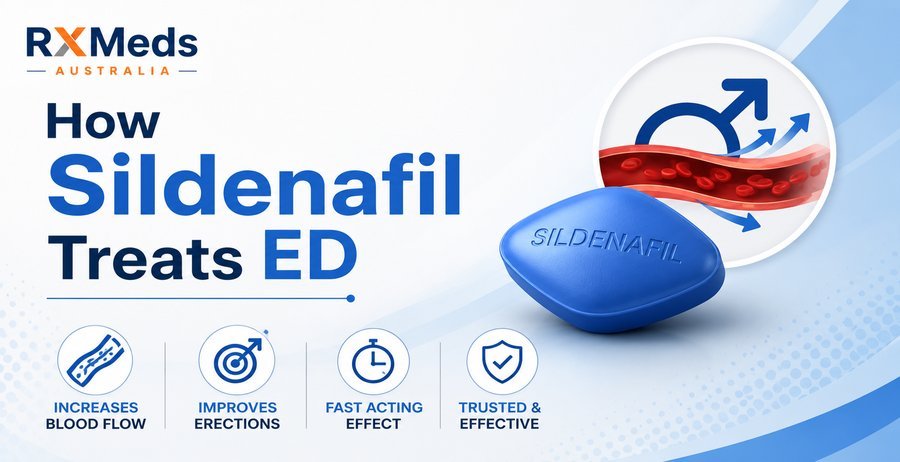
But how does sildenafil treat ED? In simple terms, sildenafil improves blood flow to the penis when a man is sexually aroused. It does not automatically cause an erection and does not increase sexual desire. Instead, it helps the body’s natural erection process work more effectively.
How Does Sildenafil Treat Erectile Dysfunction?
Sildenafil treats erectile dysfunction by inhibiting an enzyme called PDE5. During sexual stimulation, the body releases nitric oxide, which triggers the production of a chemical messenger called cyclic guanosine monophosphate (cGMP).
cGMP helps relax the smooth muscles in the blood vessels of the penis. As these muscles relax, blood flow into the erectile tissue increases, helping produce and maintain an erection.
The PDE5 enzyme breaks down cGMP. Sildenafil temporarily blocks PDE5, allowing cGMP to remain active for longer. This supports increased blood flow and makes it easier to achieve and maintain an erection in response to sexual stimulation.
Sildenafil Mechanism of Action at a Glance
| Process | What Happens | Result |
|---|---|---|
| Sexual stimulation | Nitric oxide is released | Erection pathway begins |
| cGMP production | Blood vessels relax | Blood flow increases |
| PDE5 inhibition | Sildenafil slows cGMP breakdown | Erection response is supported |
| Increased penile blood flow | Erectile tissue fills with blood | Firmer erection |
This mechanism explains why sildenafil is commonly prescribed for ED treatment. The medicine works with the body’s natural sexual response rather than creating an erection independently.
Does Sildenafil Cause an Erection Automatically?
No. Sildenafil does not normally cause an erection without sexual stimulation.
This is an important distinction for anyone searching for information about how sildenafil works for ED. The medication improves the physiological response to sexual arousal, but sexual stimulation is still necessary.
Sildenafil also does not generally increase libido or sexual desire. If low sexual desire is caused by hormonal, psychological, relationship, or other health factors, sildenafil may not address the underlying cause.
How Long Does Sildenafil Take to Work?
Sildenafil is commonly taken before anticipated sexual activity. The timing can vary between individuals, but it is generally used approximately 30 to 60 minutes before sexual activity.
The effect may be influenced by factors such as food intake, particularly a heavy or high-fat meal, overall health, age, and other medicines.
| Factor | Possible Effect |
| Sexual stimulation | Necessary for the medicine to work effectively |
| Heavy meal | May delay the onset of action |
| Alcohol | May worsen erectile difficulties or side effects |
| Other medicines | May affect safety or effectiveness |
For personalized instructions, patients should follow the dosage and timing recommended by their healthcare professional.
How Effective Is Sildenafil for ED?
Sildenafil is considered an effective treatment option for many men with erectile dysfunction. However, its effectiveness varies according to the underlying cause of ED and individual health factors.
ED can be associated with conditions such as diabetes, cardiovascular disease, obesity, hormonal changes, neurological disorders, medication side effects, stress, anxiety, and relationship difficulties.
Because ED can sometimes be an early sign of cardiovascular or metabolic health problems, persistent symptoms should be discussed with a qualified healthcare professional.
Sildenafil may be less effective if the underlying cause is not addressed. Managing diabetes, improving cardiovascular health, stopping smoking, maintaining a healthy weight, reducing excessive alcohol consumption, and addressing psychological factors may complement medical treatment.
Common Sildenafil Side Effects
Like all medicines, sildenafil can cause side effects. Common side effects may include:
- Headache
- Flushing
- Indigestion
- Nasal congestion
- Dizziness
- Visual changes
These effects are often temporary, but anyone experiencing severe or persistent symptoms should seek medical advice.
A rare but serious complication is priapism, an erection that lasts for an unusually long time and requires urgent medical attention. Sudden vision or hearing changes also require prompt medical evaluation.
Who Should Not Take Sildenafil?
Sildenafil is not suitable for everyone. One of the most important safety considerations is its interaction with nitrate medicines, which are often prescribed for chest pain or angina. Combining sildenafil with nitrates can cause a dangerous drop in blood pressure.
It may also interact with certain other medicines, including some alpha-blockers and medications that affect blood pressure or the metabolism of sildenafil.
Men with certain cardiovascular conditions or those who have been advised to avoid sexual activity should consult a healthcare professional before using ED medication.
| Safety Consideration | Why It Matters |
| Nitrate medicines | Can cause a dangerous blood-pressure drop |
| Heart conditions | Sexual activity may carry additional cardiovascular risk |
| Other medications | Drug interactions may occur |
| Excessive alcohol | May increase dizziness and reduce erectile function |
Never combine sildenafil with recreational drugs containing nitrates, and do not change the prescribed dose without medical guidance.
Sildenafil Dosage for Erectile Dysfunction
The appropriate sildenafil dosage for ED depends on individual factors, including age, health conditions, other medicines, and response to treatment.
A healthcare professional may adjust the dose based on effectiveness and tolerability. Patients should not take more than prescribed or use sildenafil more frequently than recommended.
The medicine should be obtained from a legitimate pharmacy or healthcare provider. Counterfeit ED medicines sold through unreliable online sources may contain incorrect ingredients or unsafe doses.
Sildenafil vs. Other ED Treatments
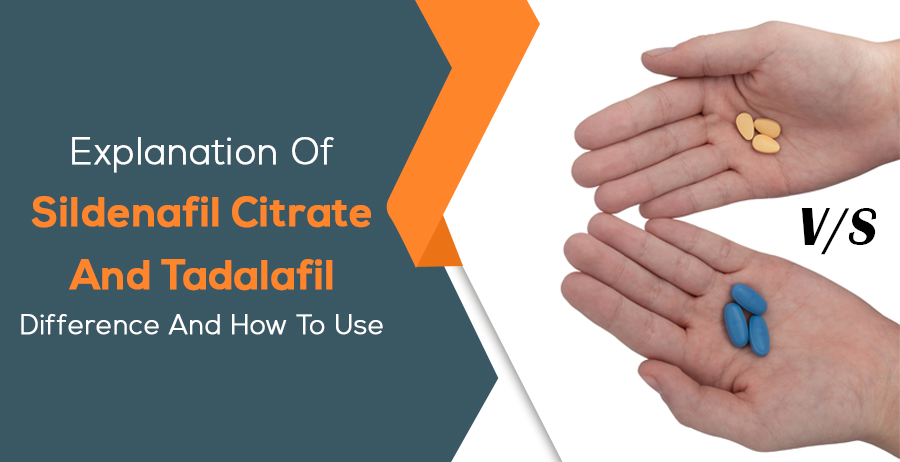
Sildenafil is one of several PDE5 inhibitors used to treat erectile dysfunction. Other medicines in this category include tadalafil, vardenafil, and avanafil.
The medicines differ in how quickly they start working, how long their effects may last, and how they interact with individual health conditions and medications.
| ED Treatment | Key Difference | Typical Consideration |
| Sildenafil | Well-established PDE5 inhibitor | Often used before sexual activity |
| Tadalafil | Longer duration of action | May offer greater timing flexibility |
| Vardenafil | PDE5 inhibitor | Individual response varies |
| Avanafil | Faster onset for some users | May be suitable for selected patients |
The best ED medication depends on the person’s medical history, lifestyle, treatment goals, and potential drug interactions.
Frequently Asked Questions
1. What is sildenafil used for?
Sildenafil is primarily used to treat erectile dysfunction. It is also used under medical supervision for certain other conditions, such as pulmonary arterial hypertension, at different dosing regimens.
2. How does sildenafil work for erectile dysfunction?
Sildenafil inhibits PDE5, helping maintain cGMP activity and increase penile blood flow during sexual stimulation.
3. Does sildenafil increase sexual desire?
No. Sildenafil does not directly increase libido. It helps support the physical erection response when sexual stimulation occurs.
4. How quickly does sildenafil work?
Sildenafil commonly begins working within about 30 to 60 minutes, although individual responses vary.
5. Can sildenafil work without sexual stimulation?
Generally, no. Sexual stimulation is needed to activate the natural physiological processes involved in achieving an erection.
6. How long does sildenafil last?
The duration of effect varies between individuals. Sildenafil is generally considered a shorter-acting PDE5 inhibitor compared with tadalafil.
7. Can I take sildenafil with nitrates?
No. Sildenafil should not be combined with nitrate medicines because the combination can cause a potentially dangerous drop in blood pressure.
8. Is sildenafil safe for everyone?
No. Safety depends on cardiovascular health, other medical conditions, and medications. A healthcare professional should determine whether it is appropriate.
9. Can sildenafil cure erectile dysfunction?
Sildenafil treats the symptoms of ED but does not necessarily cure the underlying cause. Identifying and treating contributing health or psychological factors is important.
10. What should I do if sildenafil does not work?
Do not take an extra dose without medical advice. Discuss the issue with a healthcare professional, who can assess dosage, timing, underlying causes, drug interactions, or alternative ED treatments.
Conclusion
Sildenafil is a well-established treatment for erectile dysfunction that works by supporting the body’s natural erection process. As a PDE5 inhibitor, it helps prevent the breakdown of cGMP, promoting relaxation of penile blood vessels and improving blood flow during sexual stimulation.
Understanding how sildenafil treats ED is important because the medication is not an aphrodisiac and does not automatically produce an erection. Its effectiveness depends on sexual stimulation, individual health factors, correct use, and the underlying cause of erectile dysfunction.
Because sildenafil can interact with certain medicines—especially nitrates—it should be used under appropriate medical guidance. Men experiencing persistent ED should also consider a medical evaluation, as erectile dysfunction can sometimes be associated with underlying cardiovascular, metabolic, hormonal, or psychological conditions.
For safe and effective treatment, consult a qualified healthcare professional before starting sildenafil or changing the prescribed dosage.