
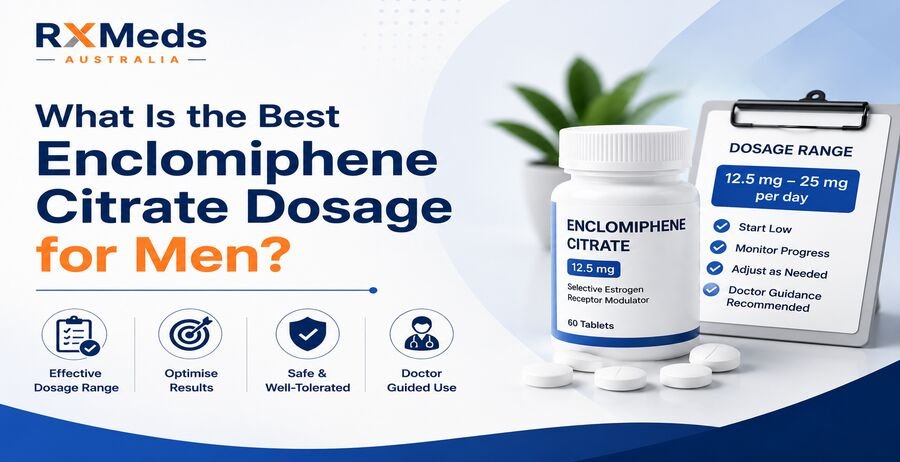
Are you considering enclomiphene to boost your testosterone naturally but unsure about the right dosage? Choosing the correct enclomiphene citrate dosage for men is essential for maximizing results while maintaining safety and preserving fertility.
Unlike traditional testosterone replacement therapy (TRT), which supplies external testosterone and may reduce natural hormone production, enclomiphene citrate works by stimulating your body’s own testosterone production. This unique approach makes it a popular option for men with low testosterone who want to improve hormone levels without compromising fertility.
However, there is no one-size-fits-all dosage. The ideal enclomiphene citrate dose depends on several factors, including your current testosterone levels, age, overall health, hormone profile, treatment goals, and your healthcare provider’s recommendations.
In this guide, you’ll learn the recommended enclomiphene citrate dosage for men, how it works, potential benefits and side effects, dosage adjustments, and answers to the most frequently asked questions to help you make informed treatment decisions.
What Is Enclomiphene Citrate?
Enclomiphene citrate is a Selective Estrogen Receptor Modulator (SERM) that blocks estrogen receptors in the hypothalamus. This action encourages the pituitary gland to produce more:
- Luteinizing Hormone (LH)
- Follicle Stimulating Hormone (FSH)
These hormones stimulate the testes to naturally produce testosterone while maintaining sperm production.
Unlike TRT, enclomiphene helps preserve fertility because it supports the body’s normal hormonal feedback loop.
Recommended Enclomiphene Citrate Dosage for Men
Although dosage should always be determined by a qualified healthcare professional, common clinical dosing ranges are shown below.
| Dosage | Typical Use | Frequency |
|---|---|---|
| 6.25 mg | Mild testosterone deficiency | Daily |
| 12.5 mg | Most commonly prescribed starting dose | Daily |
| 25 mg | Moderate to severe low testosterone | Daily |
| 25 mg | Maintenance in selected patients | Every other day |
| 50 mg | Rarely used due to increased side-effect risk | Physician supervised |
Most healthcare providers begin with 12.5 mg daily before adjusting based on laboratory results and symptoms.
Factors That Influence the Best Dosage
There is no universal dosage because hormone production varies between individuals.
The ideal dosage depends on:
- Baseline testosterone levels
- Estradiol levels
- LH and FSH values
- Fertility goals
- Age
- Body fat percentage
- Existing medications
- Liver function
- Response after 4–8 weeks
Regular blood work helps determine whether dosage adjustments are necessary.
Benefits of Proper Enclomiphene Dosage
When appropriately prescribed, enclomiphene may provide several benefits.
Improved Testosterone Production
Instead of replacing testosterone, enclomiphene encourages natural hormone production.
Preserves Fertility
Unlike TRT, sperm production generally remains active because LH and FSH continue stimulating the testes.
Increased Energy
Many men report improved energy levels and reduced fatigue after hormone optimization.
Better Libido
Healthy testosterone levels often improve sexual desire and erectile function.
Muscle Development
Higher testosterone supports lean muscle maintenance and exercise performance when combined with resistance training.
Benefits by Dosage Goal
| Goal | Expected Benefit | Monitoring Needed |
|---|---|---|
| Testosterone optimization | Increased total and free testosterone | Every 6–8 weeks |
| Fertility support | Maintained sperm production | Semen analysis if applicable |
| Symptom improvement | Better mood, energy, libido | Clinical assessment |
| Hormone balance | Stable LH and FSH response | Hormone panel |
| Long-term therapy | Sustained natural production | Regular physician follow-up |
How Long Does Enclomiphene Take to Work?
Many users notice improvements within 2 to 4 weeks, while testosterone levels often stabilize after 6 to 8 weeks.
Full benefits may continue developing over several months with consistent use and medical supervision.
Possible Side Effects
Most men tolerate enclomiphene well, but potential side effects may include:
- Headaches
- Mood changes
- Mild nausea
- Increased estradiol
- Acne
- Hot flashes
- Visual disturbances (rare)
- Sleep changes
If severe side effects occur, medical advice should be sought immediately.
How Is Enclomiphene Different from TRT?
One major advantage is that enclomiphene stimulates natural testosterone production rather than replacing testosterone.
| Feature | Enclomiphene Citrate | Testosterone Replacement Therapy |
|---|---|---|
| Natural testosterone production | Yes | No |
| Maintains fertility | Usually Yes | Often Reduced |
| LH & FSH production | Increased | Suppressed |
| Injection required | No | Often Yes |
| Testicular function | Preserved | May decrease |
This makes enclomiphene an attractive option for younger men wishing to maintain fertility while addressing low testosterone.
Tips for Taking Enclomiphene Citrate
To maximize effectiveness:
- Take the medication at the same time each day.
- Follow the prescribed dosage without self-adjusting.
- Complete routine blood tests.
- Maintain a healthy diet.
- Prioritize quality sleep.
- Exercise regularly.
- Limit excessive alcohol consumption.
- Discuss all supplements and medications with your healthcare provider.
Lifestyle improvements can significantly enhance treatment outcomes.
Who May Benefit from Enclomiphene?
Healthcare professionals may consider enclomiphene for men who have:
- Secondary hypogonadism
- Low testosterone symptoms
- Reduced libido
- Fatigue
- Fertility concerns
- Low LH or FSH due to hypothalamic or pituitary dysfunction
It is not appropriate for everyone, and underlying causes of low testosterone should be evaluated before treatment.
FAQs
1. What is the best enclomiphene citrate dosage for men?
Most healthcare providers commonly start with 12.5 mg daily, adjusting based on hormone levels and clinical response.
2. Does enclomiphene increase testosterone naturally?
Yes. It stimulates the body’s natural production of testosterone by increasing LH and FSH secretion.
3. Can enclomiphene preserve fertility?
Yes. Unlike many forms of TRT, enclomiphene generally maintains sperm production.
4. How long does enclomiphene take to work?
Many men notice improvements within 2–4 weeks, with hormone stabilization often occurring by 6–8 weeks.
5. Is enclomiphene better than testosterone replacement therapy?
For men who wish to preserve fertility, enclomiphene may be a suitable alternative, but the best choice depends on individual medical circumstances.
6. Can I take enclomiphene every day?
Many treatment plans involve daily dosing, but the schedule should always follow a healthcare provider’s recommendation.
7. What are the common side effects of enclomiphene?
Possible side effects include headaches, mood changes, acne, nausea, and elevated estradiol levels.
8. Should hormone levels be monitored during treatment?
Yes. Regular blood tests help ensure safe and effective dosing.
9. Can enclomiphene improve libido?
Improved testosterone levels may enhance libido, sexual function, and overall well-being in some men.
10. Is enclomiphene approved for everyone with low testosterone?
No. It is not appropriate for every case, and treatment should be based on a thorough medical evaluation.
Conclusion
Finding the best enclomiphene citrate dosage for men requires an individualized approach based on hormone levels, symptoms, fertility goals, and ongoing laboratory monitoring. While 12.5 mg daily is a common starting point, the ideal dosage varies from person to person and should always be determined by a qualified healthcare professional. When appropriately prescribed, enclomiphene may help increase natural testosterone production, preserve fertility, improve energy, support libido, and enhance overall quality of life. Regular follow-up appointments, blood testing, and healthy lifestyle habits remain essential for achieving safe and effective long-term results while minimizing the risk of side effects.