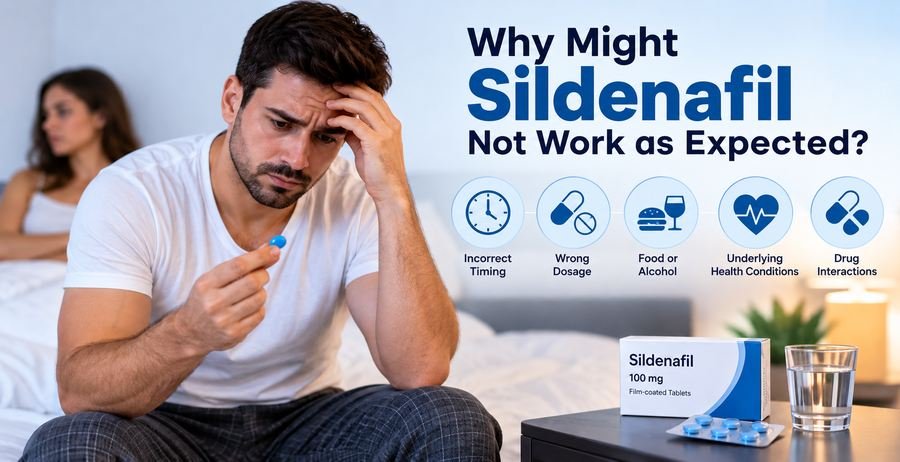
You take sildenafil expecting it to help improve your erectile function, but the result is disappointing. Perhaps you have difficulty achieving an erection, the erection does not last as expected, or sildenafil works sometimes but not always.
Naturally, this can lead to one frustrating question:
Why is sildenafil not working?
The answer is not always straightforward. Sildenafil, commonly known by the brand name Viagra, is a medicine used to treat erectile dysfunction (ED), but its effectiveness can be influenced by several physical, psychological, and lifestyle-related factors.
In some cases, sildenafil may appear not to work because of timing, food intake, alcohol consumption, or insufficient sexual stimulation. In other cases, underlying health conditions such as diabetes, cardiovascular disease, hypertension, obesity, hormonal issues or psychological erectile dysfunction may contribute to a poor response.
For Australian readers, it is also important to remember that persistent erectile dysfunction can sometimes be associated with broader health factors that deserve medical assessment rather than simply being treated as a sexual performance issue.
This article explores why sildenafil does not work for some people, why it may work inconsistently, why sildenafil may stop working after previously being effective, and what may be worth discussing with a qualified healthcare professional.
How Does Sildenafil Work?
Before understanding why sildenafil is not effective, it helps to understand how it works.
Sildenafil belongs to a group of medicines called phosphodiesterase type 5 inhibitors, commonly referred to as PDE5 inhibitors.
During sexual arousal, the body releases nitric oxide, which helps trigger a series of processes involving a substance called cyclic guanosine monophosphate, or cGMP. This process supports the relaxation of smooth muscle and increased blood flow to the penis.
Sildenafil works by inhibiting the PDE5 enzyme, helping support the cGMP pathway involved in erectile response.
However, an important point is often misunderstood:
Sildenafil does not usually create sexual desire or automatically cause an erection without sexual stimulation.
Its effectiveness depends on multiple factors, including:
- Sexual arousal and stimulation
- Timing of use
- Food intake and absorption
- Alcohol consumption
- Underlying vascular health
- Psychological factors such as stress or performance anxiety
- The severity and underlying cause of erectile dysfunction
- Other medications or drug interactions
This is why two people taking the same medicine can have very different experiences.
Common Reasons Sildenafil May Not Work as Expected
There are several possible explanations for sildenafil treatment failure or a poor sildenafil response.
Some factors may be temporary and situational, while others may indicate that the underlying cause of erectile dysfunction needs further evaluation.
1. Timing May Affect Sildenafil Effectiveness
One common reason sildenafil does not work as expected is timing.
People may expect an immediate response, but sildenafil generally requires time to be absorbed and begin exerting its effect. The onset of action can also vary depending on individual factors.
If someone is asking, “Why does sildenafil take longer to work?”, timing, food intake and individual metabolism may all play a role.
It is also important to understand that taking the medicine and waiting passively for an erection may lead to unrealistic expectations. Sexual stimulation and arousal remain important components of the erectile response.
For people experiencing inconsistent results, discussing proper use with a healthcare professional may help clarify whether timing or administration could be contributing to the problem.
2. Food May Influence How Quickly Sildenafil Works
Another frequently searched question is:
Does food affect sildenafil effectiveness?
Food can influence how quickly sildenafil is absorbed. In particular, a heavy or high-fat meal may delay absorption, which may make the medicine seem slower to take effect.
This can lead people to believe that sildenafil is not working when, in reality, the expected effect may simply be delayed.
Common search queries include:
- Why sildenafil does not work after eating
- Does sildenafil work better on an empty stomach?
- Can a high-fat meal affect sildenafil?
- Why is sildenafil taking too long to work?
The relationship between food and sildenafil can vary between individuals. Instead of making repeated changes independently, people who regularly experience poor results should discuss their experience with a doctor or pharmacist.
3. Alcohol May Affect Sexual Performance and Erectile Function
Alcohol is another factor that may contribute to inconsistent results.
Although the relationship can vary depending on the individual and the amount consumed, excessive alcohol consumption may negatively affect sexual performance and erectile function.
Alcohol can influence:
- Blood pressure
- Nervous system function
- Sexual arousal
- Erectile response
- Overall physical performance
As a result, someone may conclude that Viagra is not working when alcohol or another situational factor is actually contributing to the difficulty.
Lifestyle factors such as smoking, limited physical activity and obesity may also affect vascular health and erectile function over time.
Key Factors That May Affect Sildenafil Response
| Possible Factor | How It May Affect the Experience | What May Be Worth Discussing |
|---|---|---|
| Timing and food intake | Absorption and onset may be delayed | How and when the medicine is being used |
| Stress or performance anxiety | May interfere with sexual arousal and erection | Psychological and relationship factors |
| Underlying health conditions | May contribute to vascular, hormonal or neurological ED | Medical evaluation of contributing conditions |
| Other medications | Some medicines may affect erectile function or interact with treatment | Current prescription and non-prescription medicines |
4. Sildenafil Requires Sexual Stimulation
A common misunderstanding is that sildenafil should automatically create an erection.
However, sildenafil supports the physiological processes involved in achieving an erection during sexual stimulation. It does not necessarily create sexual desire or produce an automatic erection in the absence of arousal.
This is why people may search:
Does sildenafil work without sexual stimulation?
In general, expectations about how the medicine works can influence whether a person perceives it as effective.
If anxiety, stress, relationship concerns or lack of sexual arousal are present, these factors may influence the overall experience.
5. Stress and Performance Anxiety Can Affect Results
The connection between the mind and erectile function is significant.
Even when there is no major physical problem, psychological factors may interfere with sexual arousal and the ability to achieve or maintain an erection.
Common contributing factors may include:
- Performance anxiety
- General stress
- Relationship difficulties
- Depression
- Fear of sexual failure
- Reduced sexual confidence
This may explain why sildenafil works sometimes but not always.
For example, a person may experience satisfactory results in a relaxed situation but struggle when they are anxious or focused intensely on whether the medicine will work.
This creates a cycle:
Previous difficulty → increased anxiety → greater focus on performance → difficulty relaxing → inconsistent erectile response.
In these situations, addressing psychological erectile dysfunction or performance anxiety may be as important as focusing solely on medication.
6. Underlying Medical Conditions May Reduce Sildenafil Effectiveness
Erectile dysfunction is not always an isolated sexual health issue.
It can be associated with conditions that affect blood vessels, nerves, hormones or overall cardiovascular health.
Some medical factors that may contribute include:
- Diabetes
- Hypertension or high blood pressure
- Cardiovascular disease
- High cholesterol
- Obesity
- Metabolic syndrome
- Neurological conditions
- Nerve damage
- Hormonal imbalance
- Low testosterone or hypogonadism
For example, people may ask:
Can diabetes make sildenafil less effective?
Diabetes can affect blood vessels and nerves, both of which are important for erectile function. Similarly, vascular disease or endothelial dysfunction may influence penile blood flow.
This does not mean that sildenafil cannot work for people with these conditions. However, the underlying cause and severity of erectile dysfunction may influence treatment response.
Persistent erectile dysfunction may therefore warrant a broader medical assessment.
7. The Severity and Type of Erectile Dysfunction Matter
Not all erectile dysfunction has the same cause.
Healthcare professionals may consider whether ED is primarily related to:
- Vascular factors
- Neurological factors
- Hormonal factors
- Psychological factors
- Medication-related factors
- A combination of several causes
Someone with mild erectile dysfunction may have a different response compared with someone experiencing severe, chronic or organic erectile dysfunction.
In some cases, poor response to a PDE5 inhibitor may suggest that further evaluation of the underlying cause is needed.
This is why simply searching for a stronger solution may not address the real issue.
8. Other Medications May Influence Erectile Function
Another important factor is medication use.
Some prescription medicines can affect erectile function, while others may have important interactions or safety considerations when combined with sildenafil.
Medication categories that may be relevant include:
- Certain blood pressure medicines
- Some antidepressants
- Alpha-blockers
- Nitrate-containing medicines
- Medicines that influence drug metabolism
The body’s processing of sildenafil can also be influenced by metabolic pathways, including CYP3A4-related interactions.
It is important not to stop prescribed medication or change treatment independently because of erectile difficulties.
A doctor or pharmacist can review current medicines and determine whether a medication-related factor could be contributing.
9. Why Does Sildenafil Work Sometimes but Not Always?
One of the most frustrating experiences is inconsistent performance.
You may wonder:
Why does sildenafil work one time but not another?
There may not be one single answer.
The circumstances surrounding each experience can be different.
For example:
- One occasion may involve a heavy meal.
- Another may involve alcohol.
- Stress levels may be different.
- Sexual stimulation may vary.
- Fatigue may be a factor.
- Anxiety may increase after a previous disappointing experience.
- The underlying health condition may affect erectile function inconsistently.
Therefore, sildenafil inconsistent results do not automatically mean that the medicine has completely failed.
Looking at the overall pattern rather than one isolated experience may provide more useful information for a healthcare consultation.
10. Why Might Sildenafil Stop Working After Previously Being Effective?
Another common concern is:
Why did sildenafil stop working?
If sildenafil was previously effective but now appears less effective, several factors may be worth considering.
Possible explanations include changes in:
- General health
- Cardiovascular health
- Weight
- Stress levels
- Alcohol consumption
- Other medications
- Hormonal status
- Severity of erectile dysfunction
- Relationship or psychological circumstances
It is also possible that a new or worsening health issue is contributing to erectile difficulties.
For this reason, persistent changes in erectile function should not automatically be dismissed as simply “the medicine stopped working.”
A qualified healthcare professional can assess whether additional medical, psychological or lifestyle factors may be involved.
Sildenafil, Viagra and PDE5 Inhibitor Treatment Failure: What Does It Mean?
The terms sildenafil failure, sildenafil treatment failure or PDE5 inhibitor failure can sound definitive, but a poor response does not necessarily mean that every possible factor has been assessed.
A person may have:
- A temporary poor response
- Inconsistent results
- Incorrect expectations
- A situational issue
- An underlying medical condition
- A psychological contributor
- A medication-related factor
The next step should focus on understanding why sildenafil is not working for that individual, rather than assuming there is only one universal explanation.
What Should You Do If Sildenafil Does Not Work?
If sildenafil does not work as expected, the safest approach is to avoid making unsupervised changes.
Instead, consider discussing the situation with a qualified healthcare professional.
Useful information to discuss may include:
- Whether the medicine has ever worked
- Whether results are inconsistent or consistently poor
- The timing of use
- Food and alcohol intake
- Other medicines or supplements
- Existing medical conditions
- Stress, anxiety or relationship factors
- Changes in overall health
For people in Australia, a GP or other appropriately qualified healthcare professional may help assess the broader causes of erectile dysfunction and determine whether further evaluation is appropriate.
Do not assume that taking more medication independently is the correct answer. Sildenafil can have important safety considerations and may not be appropriate for everyone, particularly in combination with certain medicines such as nitrates.
Could Another Erectile Dysfunction Treatment Be Considered?
If sildenafil is consistently ineffective, a healthcare professional may discuss other approaches depending on the individual’s medical history and the cause of ED.
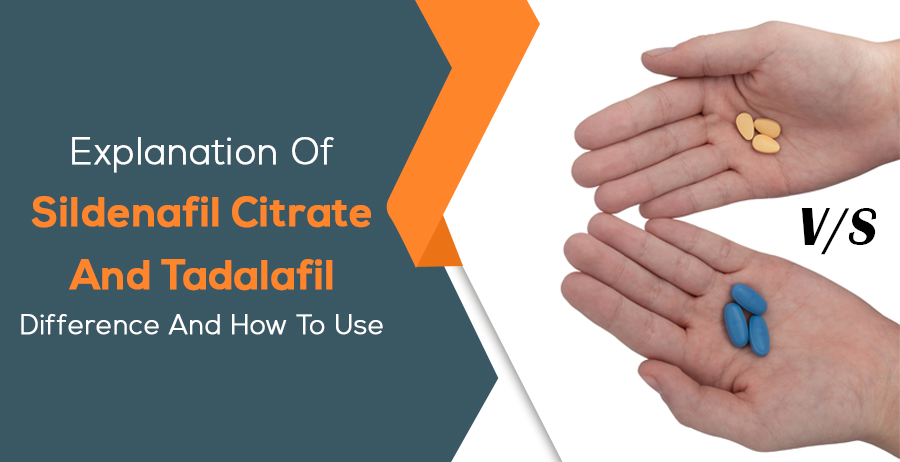
Other PDE5 inhibitors include:
Some people may also search for Kamagra Oral Jelly when exploring different erectile dysfunction treatment options. As with other ED medicines and formulations, suitability can depend on individual health factors, current medications, and other safety considerations. It is important to discuss appropriate treatment options with a qualified healthcare professional.
However, tadalafil vs sildenafil is not simply a question of which medicine is “stronger” or “better.” Different medicines have different characteristics, durations, and suitability considerations.
The best approach depends on factors such as:
- The person’s health history
- Other medicines being taken
- The pattern and severity of erectile dysfunction
- Treatment response
- Potential side effects and contraindications
Other erectile dysfunction treatment options may also be considered in appropriate clinical circumstances.
A personalised assessment is generally more useful than choosing an alternative based solely on online claims or anecdotal experiences.
When Should You Speak With a Healthcare Professional?
Consider seeking professional advice if:
- Sildenafil is consistently ineffective.
- Erectile dysfunction is getting worse.
- Sildenafil previously worked but no longer appears effective.
- You have diabetes, cardiovascular disease or another chronic health condition.
- You experience significant anxiety or distress related to sexual performance.
- You are taking multiple medications.
- You are unsure whether sildenafil is safe with your current treatment.
- Erectile difficulties are affecting your relationship or quality of life.
Erectile dysfunction can sometimes be associated with broader health issues involving cardiovascular, metabolic, hormonal or psychological factors.
Addressing the underlying cause may be important for both sexual health and general wellbeing.
Frequently Asked Questions
1. Why is sildenafil not working?
Sildenafil may not work as expected because of factors such as timing, food intake, alcohol, insufficient sexual stimulation, anxiety, underlying health conditions or other medications.
2. How long does sildenafil take to work?
The onset can vary between individuals. Food intake and other factors may influence how quickly it is absorbed and when an effect is noticed.
3. Does sildenafil work without sexual stimulation?
Sildenafil generally supports the erectile response during sexual arousal and does not automatically create an erection without sexual stimulation.
4. Can food make sildenafil less effective?
A heavy or high-fat meal may delay absorption, which can make sildenafil appear slower to work for some people.
5. Can alcohol affect sildenafil?
Excessive alcohol consumption may negatively affect sexual performance and erectile function, potentially contributing to inconsistent results.
6. Can anxiety stop sildenafil from working?
Performance anxiety, stress and other psychological factors can interfere with sexual arousal and erectile function, even when medication is being used.
7. Can diabetes make sildenafil less effective?
Diabetes can affect blood vessels and nerves involved in erectile function, which may influence treatment response in some individuals.
8. Why does sildenafil work sometimes but not always?
Results may vary because of differences in food intake, alcohol consumption, stress, anxiety, sexual stimulation, fatigue and underlying health factors.
9. Why did sildenafil stop working after previously being effective?
Changes in health, medications, cardiovascular status, stress, hormone levels or the underlying severity of erectile dysfunction may contribute to a reduced response.
10. What should I do if sildenafil does not work?
Speak with a qualified healthcare professional rather than changing how you use the medicine on your own. They can assess possible contributing factors and discuss appropriate next steps.
Conclusion
If you are wondering why sildenafil does not work, the answer may involve much more than the medication itself.
Timing, food, alcohol, sexual stimulation, stress, performance anxiety, underlying health conditions, medication interactions and the severity of erectile dysfunction can all influence the response.
For some people, sildenafil may work inconsistently. For others, it may appear to stop working after previously being effective. A poor response may also highlight the importance of assessing vascular health, hormonal factors, psychological wellbeing or other underlying causes of erectile dysfunction.
The most useful approach is to look at the complete picture rather than focusing only on whether an ED pill worked on one particular occasion.
If sildenafil is consistently ineffective or your erectile function has changed significantly, seeking advice from a qualified healthcare professional can help identify contributing factors and discuss appropriate erectile dysfunction treatment options.
In short: sildenafil not working does not always mean treatment has failed—it may mean that the underlying factors affecting erectile function need closer attention.